

Britain is facing a blitz of Arctic storms throughout December, according to the Met Office. A relentless barrage of freezing weather threatens to disrupt the festive period, following the havoc caused by Storm Arwen in November.
Meteorologists at British Weather Services warn the storms will continue over the next month and into 2022, with Storm Arwen and its 100 mph winds being the first of several. The long-range forecast suggests this winter might be the coldest since the big freeze of 2010/11, with snow expected too.
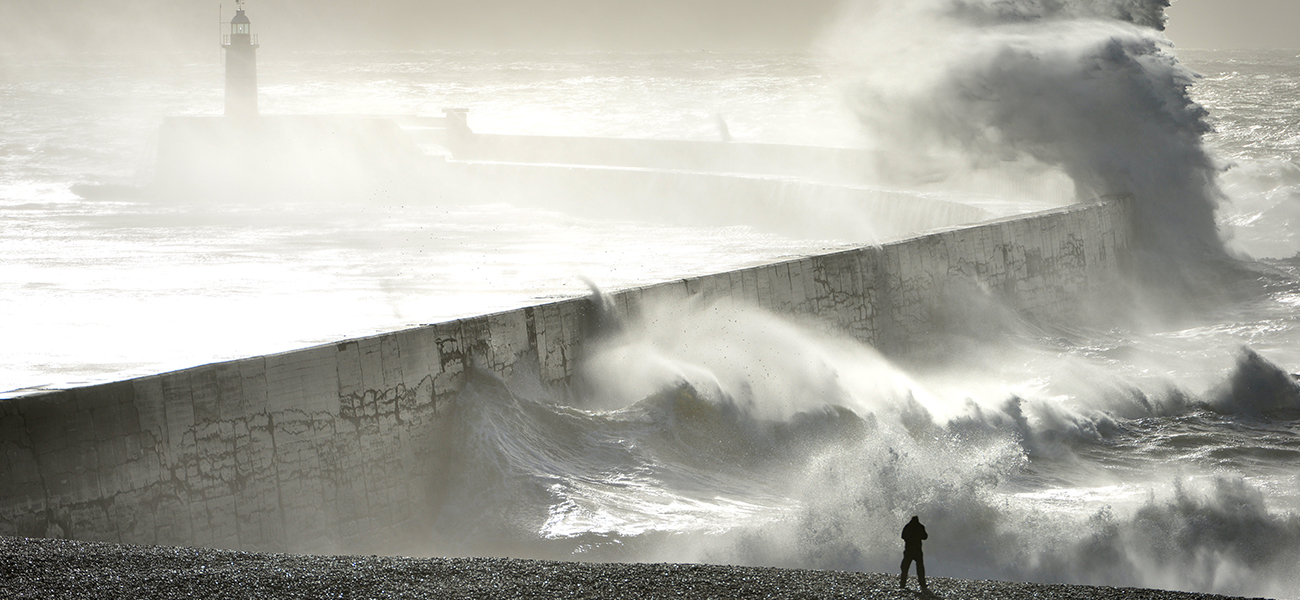
© Peter Cripps / Shutterstock.com
Britain has had its fair share of storms over the years, so householders will be bracing themselves for the disruption that extreme weather causes. Storms can occur all year round and it’s not only winter weather that causes problems. Read on to find out about some of the worst storms to hit British shores in recent history…
Storm Evert
Storm Evert struck the UK on 29th and 30th July 2021, with winds up to 77 mph and large waves causing dangerous conditions along the coast. The worst hit areas were southern and south-west England, where people enjoying summer holidays on campsites experienced their tents being blown away or flattened overnight. Bands of heavy rain stretched from Wales to southeast Ireland.
Storm Christoph
The new year got off to a bad start in January 2021 when Storm Christoph battered Britain, with 100 mm of rain falling across some areas. Parts of Cheshire, Lancashire and Greater Manchester had as much rainfall in three days as they would normally have in the whole month. Homes in Cheshire were flooded, Northwich town centre was underwater and some people had to be evacuated by dinghy. More flooding occurred around Manchester, Bangor-on-Dee, Maghull and across South Wales. The East Coast Main Line was affected by flooding around York and many roads were closed due to snow.
Storm Bella
Hitting the UK on Boxing Day 2020, Storm Bella continued throughout 27th December, causing persistent heavy rain and very strong winds across England, Scotland and Wales. Fallen trees created a risk to life and disrupted rail services in south-west and south-east England. Many properties flooded in Gloucestershire, Oxfordshire, Northamptonshire and Bedfordshire. The Isle of Wight recorded the highest winds, with gusts of up to 106 mph.
Storm Lorenzo
Storm Lorenzo started out as a mid-Atlantic hurricane but was downgraded to a storm as it travelled towards the west coast of Ireland. Persistent rain in late September had already caused some flooding problems, but the heavy rainfall on 3rd and 4th October 2019 caused more flooding and the associated disruption across the west of Ireland, parts of Wales, southern England and the Midlands.
Ex-Hurricane Bertha
The UK experienced some unseasonal wet and very windy weather on 10th and 11th August 2014, when ex-hurricane Bertha wreaked havoc. North-east Scotland was badly hit by flooding, especially around the Inverness to Moray area. Rail travel was impacted, roads were submerged in water and 200 homes were flooded in Elgin. Fallen trees caused problems across roads in eastern England and north-east Scotland, while a walkers’ footbridge at the foot of Glen Derry, to access the Cairngorms, was washed away entirely.
Preparing for storms
If you live in a susceptible area, check for local flood warnings on the government website, or on local radio and TV news. Let your neighbours know if you learn there’s a risk of flooding.
Buy sand and sandbags from builders’ merchants in advance, as they will be in high demand. Use them as a barrier to help prevent water from entering your home and to divert it away from your property. Put a sandbag in your toilet bowl to help stop sewage water from entering your bathroom. Move your vehicle to higher ground in the hope it won’t be caught by rising floodwater.
Take photos inside your home, so you can use them as “before” pictures in the event of having to make an insurance claim. If you must evacuate due to flooding; turn the power off at the mains, else you could risk being electrocuted.
Make sure all your windows and doors are shut and locked to help reduce the volume of floodwater that can enter. If you have pets, especially cats that are prone to wandering, make sure you have them in crates ready to take with you if you have to evacuate.
During a storm
Never walk, drive or swim through floodwater. Even six inches of fast-flowing water is enough to knock you over, while water 2 ft deep can float a car. Never walk on sea defences or riverbanks during a storm if you’re caught outdoors.
Try to avoid contact with the floodwater at all times, as it could be contaminated with sewage. If you are exposed, wash your skin and clothes thoroughly at your earliest opportunity.
If you find yourself with nowhere to stay, contact your local council for help. You may have to go to an emergency shelter initially, but if you can’t return home for a longer period until flood damage is rectified, your council will help you to find somewhere suitable to stay in the interim.
After floods, check for updates on whether the tap water is safe to use. Always boil your water, or if in doubt, use bottled water.
If your home is affected by flooding, you may need to replace your furniture, as there’s a likelihood it will have been damaged beyond repair. Furniture Rental Online can help, with our emergency furniture rental services. If disaster strikes, our professional advisors can assist insurance companies, loss adjusters, insurance claims handlers and individuals who have suffered flood damage. We can provide temporary furniture to help get you back on your feet.
Please contact us for further information on our hassle-free rental services.